The Besenius group employs supramolecular non-covalent synthesis as a key strategy for organising molecular components into ordered patterns, structures, and materials spanning the nanoscale to the mesoscale. Our research focuses on organic supramolecular chemistry and molecular self-assembly in aqueous media, with particular emphasis on the development of adaptive supramolecular polymers and biomaterials. We design interactive materials that respond to temperature, pH, oxidative stress, enzymatic activity, and mechanical stimuli. A major focus lies on multicomponent systems engineering and on advancing the design of supramolecular materials through the establishment of structure–process–property relationships.
Peptides and glycopeptides are central building blocks in our research and are used to develop biomedical carrier systems, molecular vaccines, and increasingly materials for bioelectronics and regenerative medicine. Applications in regenerative medicine and immunotherapy are pursued in close collaboration with biologists and immunologists both on the Mainz research campus and through international collaborations.
-
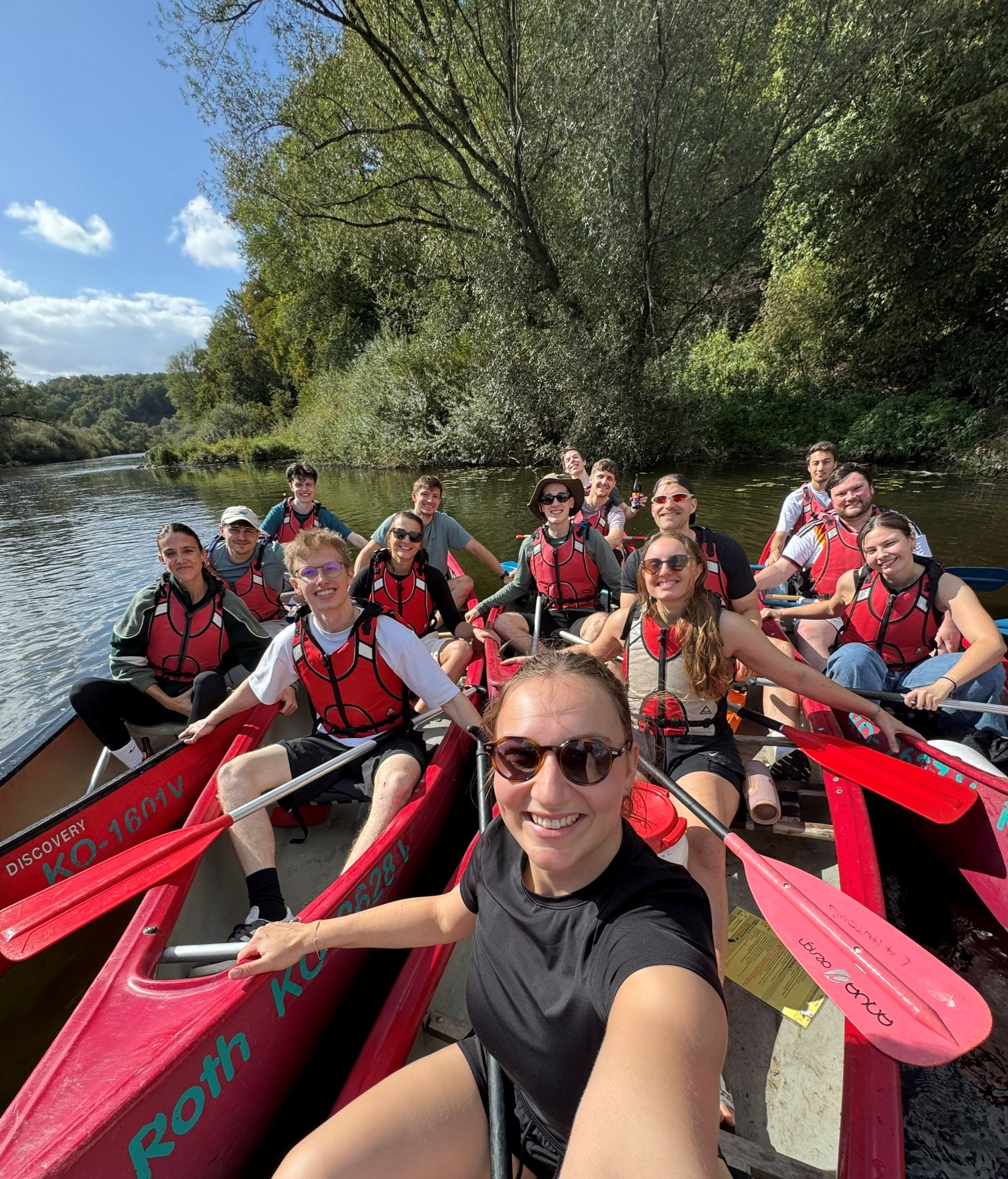
AK Besenius goes canoeing!
AK Besenius takes a break from the lab and heads outdoors for a canoeing trip on the Lahn!
-
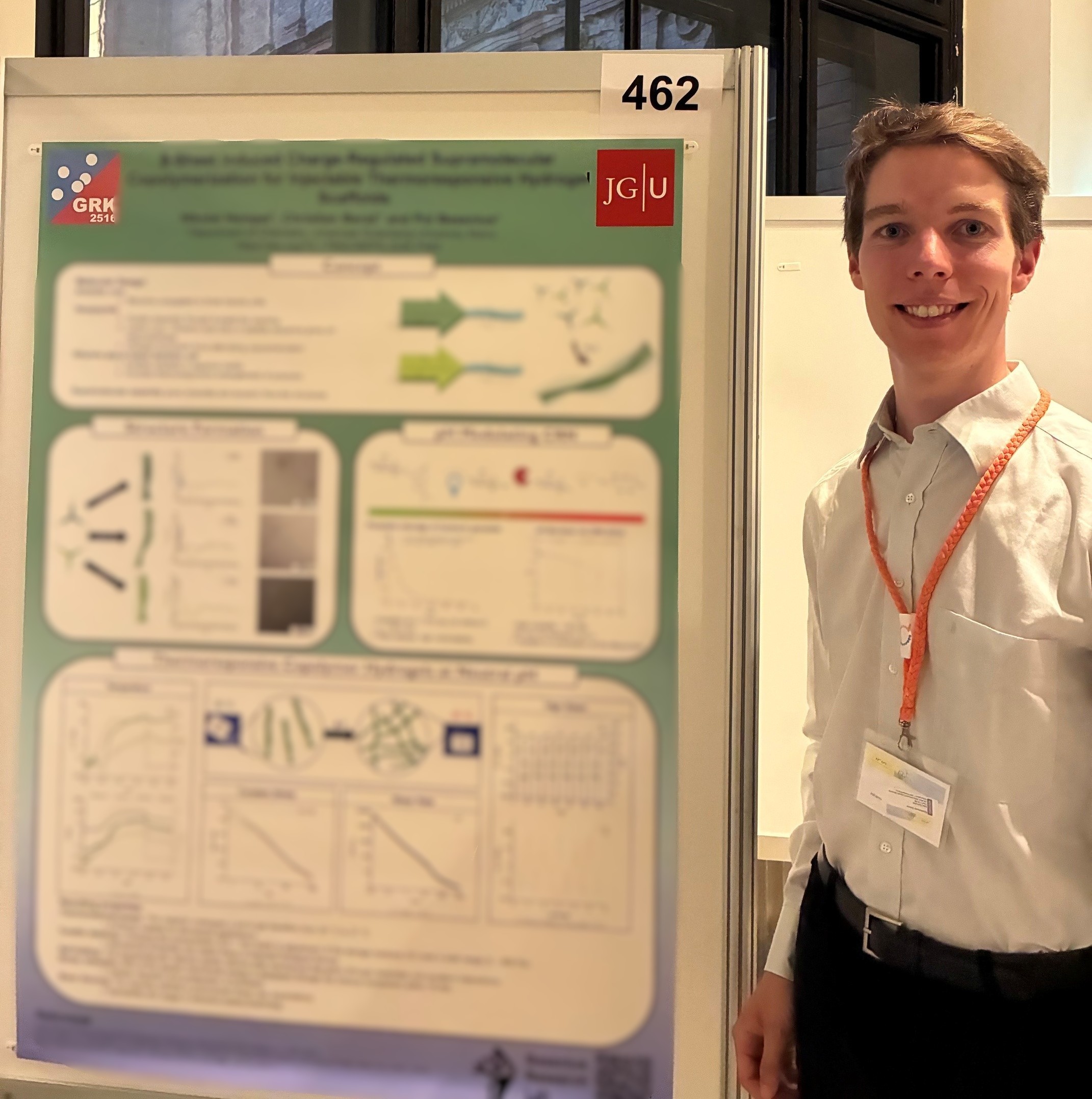
Nikolai attends the 38th European Peptide Symposium
Nikolai attends and presents his poster at the European Peptide Symposium in Vienna!
-
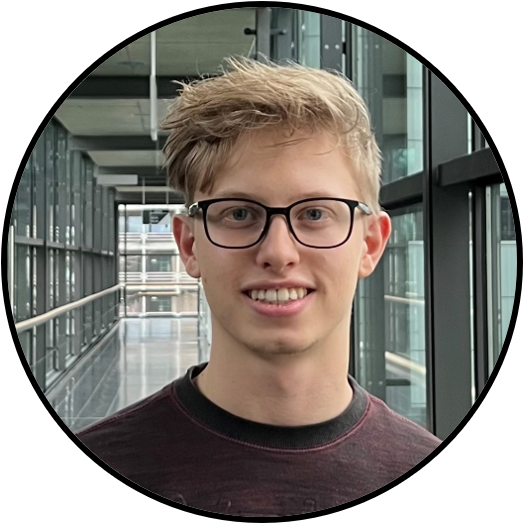
Alex starts his PhD studies
Finn and Shawn defended their Bachelor theses and Alex his Master thesis triumphantly. He stays in the Besenius group for his PhD. We are happy to keep you onboard!
Funding institution: Deutsche Forschungsgemeinschaft (project number: 405552959)
Website: GRK 2516
Funding institution: Deutsche Forschungsgemeinschaft (project number: 464588647)
Website: SFB 1551
Funding institution: Deutsche Forschungsgemeinschaft (project number: 465145163)
Website: SFB 1552
Funding institution: Carl Zeiss Stiftung
CZS website: Nano@Liver.
Funding institution: Carl Zeiss Stiftung
JGU website: InteReg. CZS website: InteReg.
Funding institution: Carl Zeiss Stiftung
JGU website: HALOCYCLES. CZS website: HALOCYCLES.
Funding institution:
Website: FZI
Funding institution:
Website: SusInnoScience
Funding institution:
Website: MPGC
most recent Research Papers:
-
Thermoresponsive, Shear-Thinning Supramolecular Hydrogels from Peptide-Polymer Conjugates for Bioinspired 3D Cell Culture
B. M. Huntington§, J. A. Dresel§, M. Schweitzer, E. M. Furst, P. Besenius*, A. M. Kloxin*,bioRxiv 2026. DOI: 10.64898/2026.09.04.749227.(§ these authors contributed equally)
-
Cucurbit[8]uril Couples Enzymatic and Supramolecular Reaction Networks for Peptide Isomerization and Recognition in Gain-of-Function Hydrogels
A. Som, M. V. F. Quijano Rincon, N. Hempel, L. Johannknecht, M. Obenauer, P. Czodrowski, T. Weil, P. Besenius*, ChemRxiv 2026. DOI: 10.26434/chemrxiv.15007664.
-
Conformational Control of Excited-State Proton Transfer Enables Ratiometric and Reversible Mechanosensing in Soft Elastomer Materials
F. A. Soares, D. J. Kiebala, L. A. Baptista, M. Wagner, Q. K. Dao, R. Ulbricht, A. Walther, P. Besenius*, 2026 submitted.
-
Electrochemical PVC Recycling Unlocks Efficient Ring-Closure toward Amine-Bearing Ketene Acetals as Novel Monomers for Poly(amino ester) Synthesis
S. Becker, P. Arnold, N. Herrmann, A. Neerakkal, A. Muff, S. R. Waldvogel*, P. Besenius*, 2026 submitted.
-
Chirality Directs Coacervate Formation, Structure, and Function
S. Sharma, M. Kumar, V. A. Xenidis, M. Thomas, D. Kozlova, D. Ghosh, P. Besenius, L. Stelzl*, S. Dhiman*, ChemRxiv 2026. DOI: 10.26434/chemrxiv.10001523.
-
RNA G-Quadruplexes Mediate Cooperativity in HNRNPH Binding and Splicing Regulation
K. Tretow, M. Keller, M. Mesitov, M. Ćorović, M. Brüggemann, J. Busam, F. Zhuang, N. Körtel, N. Melchior, A. Busch, S. Braun, N. Hellmann, H. Hänel, P. Besenius, S. Strand, Y. Barash, S. Legewie, F. Schmid, J. König*, K. Zarnack*, bioRxiv 2026. DOI: 10.64898/2026.03.03.709289.
-
![[82] Dilute But Dense – Reversible Crosslinking Enables Water-Rich (Bio)Polymer Condensates.](https://www.ak-besenius.chemie.uni-mainz.de/wp-content/uploads/sites/837/2026/03/advs74206-gra-0001-m.jpg)
[82] Dilute But Dense – Reversible Crosslinking Enables Water-Rich (Bio)Polymer Condensates.
X. Chen*, J.A. Vishnu, P. Besenius, J. König, F. Schmid*,Adv. Sci. 2026, 13, e19636. DOI: 10.1002/advs.202519636. (Open Access)
-
![[81] Metal Ion-Specific Modulation of Network Connectivity and Defects in Poly(ethylene glycol) Peptide Conjugate Assemblies and Hydrogels.](https://www.ak-besenius.chemie.uni-mainz.de/wp-content/uploads/sites/837/2026/02/images_large_cm5c02542_0010.jpeg)
[81] Metal Ion-Specific Modulation of Network Connectivity and Defects in Poly(ethylene glycol) Peptide Conjugate Assemblies and Hydrogels.
M. Ahmadi, K. Wittek, H.S. Rieger, M. Thomas, L. Hartmann, P. Besenius*, S. Seiffert*,Chem. Mater. 2026, 38, 1240-1252. DOI: 10.1021/acs.chemmater.5c02542. (Open Access)
-
[P1] Selective Antibody-Drug Conjugates for Targeted Cancer Therapy.
T. Bopp, P. Besenius, R. Attariya-Hefnawy, N. Stergiou, H. Kunz, E. Schmitt, 2024, EP4684805A1. WO2026021993A1.
most recent Reviews and Book Chapters:
-
[R12] Polymers: The Hidden Heroes of Life.
D. Dormann, R. Fröhlich, T. Dias, N. Belo do Couto, N. Heinss, S. Hutten, K. Küssner, A. Ceron-Noriega, L. Chargui, M. Gelléri, A. Gopalan, K. Hertäg, R. Piccinno, C. Rickert, A. Schaaf, E. Schumbera, S. Shoup, F. Stiehler, P. Turunen, M.A. Andrade-Navarro, P. Beli, P. Besenius, M. Bonn, R. Dahm, S. Dhiman, S. Gerber, M. Girard,…
-
![[R11] Mechanophoric Hydrogels: When Mechanical Stress Produces Useful Responses.](https://www.ak-besenius.chemie.uni-mainz.de/wp-content/uploads/sites/837/2026/06/Mechanogel_Graphical_abstract-scaled-1.jpg)
[R11] Mechanophoric Hydrogels: When Mechanical Stress Produces Useful Responses.
F. Arenhart Soares, P. Besenius*,Org. Chem. Front. 2025, 12, 3107-3128. DOI: 10.1039/d4QO02060j. (137 references) (Open Access)Invited Contribution to the themed collection “Celebrating the 60th birthday of Professor Frank Würthner”
-
![[R10] Supramolecular Assembly and Thermogelation Strategies using Peptide-Polymer Conjugates.](https://www.ak-besenius.chemie.uni-mainz.de/wp-content/uploads/sites/837/2026/06/TOC-rev-10-PeptConj-scaled-1.jpg)
[R10] Supramolecular Assembly and Thermogelation Strategies using Peptide-Polymer Conjugates.
C. Pascouau, M. Schweitzer, P. Besenius*,Biomacromolecules 2024, 25, 2659-2678. DOI: 10.1021/acs.biomac.4c00031. (126 references) (Open Access)Invited Contribution to the “Peptide Materials” virtual special issue
-
![[R9] The Development of Vaccines from Synthetic Tumor-Associated Mucin Glycopeptides and their Glycosylation-Dependent Immune Response.](https://www.ak-besenius.chemie.uni-mainz.de/wp-content/uploads/sites/837/2026/06/TOC_10.1002_tcr.202100182.jpg)
[R9] The Development of Vaccines from Synthetic Tumor-Associated Mucin Glycopeptides and their Glycosylation-Dependent Immune Response.
N. Stergiou*, M. Urschbach, A. Gabba, E. Schmitt, H. Kunz, P. Besenius*,Chem. Rec. 2021, 21, 3313-3331. DOI: 10.1002/tcr.202100182. (208 references) (Open Access)Invited Contribution to the Recent Advances in Carbohydrate Chemistry special issue
-
![[R8] Defects and Defect Engineering in Soft Matter.](https://www.ak-besenius.chemie.uni-mainz.de/wp-content/uploads/sites/837/2026/06/TOC-defects.jpg)
[R8] Defects and Defect Engineering in Soft Matter.
A. Jangizehi, F. Schmid, P. Besenius, K. Kremer, S. Seiffert*,Soft Matter 2020, 16, 10809-10859.DOI: 10.1039/d0sm01371d. (523 references) (Open Access)
-
[Rep1] Project RACCOON: Automated Construction of PDB Files for Polymers and Polymer Peptide Conjugates.
M.L. Obenauer*, K.N. Spauszus, P. Besenius, F. Schmid,J. Open Source Softw. 2024, 9, 6293. DOI: 10.21105/joss.06293.
Editorials, Highlights, Conference Proceedings and Interviews:
-
[M16] Suprachem 2022 in Mainz.
Y. Wang, T. Weil, S. Kubik, A. Walther, P. Besenius,Nachrichten aus der Chemie 2022, 70, 87. DOI: 10.1002/nadc.20224132129.
-
[M15] „ISAP: Auslandserfahrung stärkt die Persönlichkeit“.
Interview with Niklas Kuschkowitz (Territory GmbH, Köln), 2nd September 2022, DAAD Aktuell. Link.
-
[M14] Happy New Year, Organic Materials!
P. Besenius*, M. Mastalerz*, X. Zhu*,Organic Materials 2022, 4, i-ii. DOI: 10.1055/s-0041-1732716.
-
[M13] Young Talents in Polymer Science.
P. Besenius*, F.H. Schacher*, T. Terashima*,Macromol. Rapid Commun. 2021, 42, 2100159. DOI: 10.1002/marc.202100159.Editorial for special issue.
-
[M12] Editorial Board Focus: Professor Pol Besenius
Synform 2020, 7, A97-98. DOI: 10.1055/s-0039-169118439.
-
[M11] „Internationalisierung für Einsteiger“.
Interview with Astrid Hopp (Territory GmbH, Köln), 17th October 2019, DAAD Aktuell – 40 Jahre Internationale Studien- und Ausbildungspartnerschaften (ISAP). Link.
Aqueous self-assembly of molecular building blocks into ordered architectures, polymers and materials opens exciting avenues for fundamental developments in nanoscience and applications in biomedical technologies, optoelectronics and catalysis (Chem. Rev. 2016). Taking inspiration from protein functionality in their biological setting, the Besenius lab has produced electrostatic- and redox-regulated supramolecular polymerisations in water (Angew. Chem. 2013, Chem. Eur. J. 2015). The supramolecular monomer designs we have developed are based on β-sheet encoded anionic and cationic peptides that form anisotropic supramolecular copolymers with a nanorod-like morphology. By doing so the materials becomes stimuli-responsive and polymerizations can be turned on and off in response to pH- and redox-triggers. We have shown that the pH-triggered monomer-polymer transition is simply tuned via thermodynamically controlled comonomer affinities (Polym. Chem. 2015), whereas kinetically controlled assemblies are achieved by coupling multiple equilibria through enzyme catalysed processes (Angew. Chem. 2017), or by confining the self-assembly process onto metallic surfaces (Angew. Chem. 2016, Faraday Discuss. 2017).
In order to establish a set of semi-empirical rules for the design of supramolecular nanomaterials we often use the concept of frustrated self-assembly, which describes the balance of positive non-covalent interactions with repulsive forces. Here, we either use electrostatic interactions to tune the repulsive contribution in the frustrated self-assembly (J. Mater. Chem. B 2013, Org. Biomol. Chem. 2015), or we rely on steric constraints in order to induce frustration and restrict the one-dimensional self-assembly into well-defined nanorods in water (Chem. Eur. J. 2015). In view of recent reports that anisotropic shapes in the design of biomedical carrier materials outperform conventional isotropic structures, we are particularly interested in the development of supramolecular multifunctional materials and their biomedical applications. For example, we aim to explore applications in immunotherapy (ChemBioChem 2018, 912 & 1142), where we attach a variety of glycopeptide epitopes onto the self-assembling constructs that can activate the immune system for a selective response towards molecular defined specific antigens. Multipotent fully synthetic vaccines, can thus be developed conveniently using a supramolecular engineering approach that rely on the simple mixing of multifunctional monomeric building blocks.
Members involved:
Cooperation partners:
Selected Publications:
Spatial and temporal control in multistimuli-responsive structures are key properties to advance and optimize functional soft matter. In an attempt to develop autonomous non-equilibrium states in supramolecular polymers, and hydrogel materials, we have expanded the above concept of ß–sheet self-assembly of alternating hydrophilic and hydrophobic amino acids. An interplay of pH- and oxidation-stimuli, promoted by the production of reactive oxygen species (ROS) thus lead to transient supramolecular polymerisations, with tuneable lifetimes and stabilities (Angew. Chem. 2017). In addition, the monomers can be equipped with thermoresponsive triethylene glycol chains, which in the polymeric state lead to a thermogelation process at a biomedically relevant temperature of 30-35 °C. Since reactive oxygen species play an important role in signal transduction cascades, our materials offer great potential for applications of these dynamic biomaterials in redox microenvironments.
We further aim to study the fundamentals of the supramolecular polymerisation mechanism, the thermodynamics which dictate the size and stability of the colloidally stable polymers, as well as kinetic parameters and non-equilibrium states (Macromolecules 2017). Most recently we were able to extend the design rules from small molecular weight building blocks to macromolecular designs that upon folding produce viromimetic particles, with a densely ordered peptide core, that is surrounded by a shielding and protein repelling core of hydrophilic polymer (Chem. Commun. 2018). A reduction of the pH leads to disassembly, and the pH stability window for the particles follow the same behaviour as protein-based assemblies, like virus particles.
Members involved:
Cooperation partners:
Selected Publications:
A recent research strategy in the Besenius group involves the design of a new class of hybrid bioorganic Au(I)-peptide materials. The aim is to couple molecular Au(I)-complexes to small peptide building blocks, in order to prepare new metalloamphiphiles as supramolecular monomers. Structurally and functionally the aurophilic interaction between Au(I)-centres is at the heart of these systems. We have developed a facile synthetic route for the preparation of stable peptidic Au(I)-metalloamphiphiles equipped with stabilising phosphane ligands (Chem. Commun. 2015). Using a diphenylalanine derivative, we have shown that the Au(I)-metalloamphiphile self-assembles into luminescent micellar nanostructures in buffered aqueous environments of medium to high ionic strength. We have extended the ligation strategy for Diels-Alder conjugation and biotinylation of Au(I)-complexes (Chem. Eur. J. 2017). The attractive feature of the Au(I)-complexes, are their phosphorescent properties which depend on the tuneable distance between the gold centres, as wells as the long lifetimes of the excited states. This new class of bioinorganic hybrid materials hold great promise for chemo- and biosensors, and for the preparation of ultrathin and mechanosensitive luminescent nanowires. A spectacular finding which holds great promise for further efforts in the above-mentioned applications, is a recently discovered stepwise self-assembly of a AuI-metallopeptides in water. Here we achieved kinetic control of the supramolecular polymer morphology using a temperature-dependent assembly protocol, which yields low dispersity supramolecular polymers, a metastable state at low temperature or helical bundled nanorods, at higher temperatures (J. Am. Chem. Soc. 2018).
Members involved:
Cooperation partners:
Selected Publications:
The main and most important feature of vaccines is the induction of an immunological memory response, which is key to providing long-term protection against pathogens. The current strategies for potent antibacterial and antiviral vaccines employ conjugation of pathogen specific entities onto carrier proteins, and are limited to formulations that suffer from low stability and short shelf-lives, and are thus not viable in developing countries. Strategies for the development of new vaccinations against endogenous diseases like cancer further remain an unmet challenge, since current methodologies suffer from a lack of a modular and tailored vaccine-specific functionalisation. SupraVacc therefore proposes a new design approach for the development of fully synthetic molecular vaccines, using carbohydrate and glycopeptide appended epitopes that are grafted onto supramolecular building blocks. These units can be individually designed to attach disease specific antigens and immunostimulants. Due to their self-assembling properties into nanoscaled pathogen mimetic particles, they serve as a supramolecular subunit vaccine toolbox. By developing a universal supramolecular polymer platform, we will construct multipotent vaccines from glycan-decorated peptides, that combine the activity of protein conjugates with the facile handling, precise composition and increased stability of traditional small molecule pharmaceutical compounds. SUPRAVACC will pioneer the design of minimalistic and broadly applicable vaccines, and will evaluate the supramolecular engineering approach for immunisations against antibacterial diseases, as well as for applications as antitumour vaccine candidates.
Selected Publications:
The Besenius lab gratefully acknowledges financial support from the following organisations:
Our laboratory is well equipped with facilities for the synthesis and characterisation of organic, peptide and supramolecular materials.
Further information about the core facilities of the Department of Chemistry can be found below.
Pol Besenius was born in Wiltz, Luxembourg in 1981, where he grew up and completed secondary school education. In 2000 Pol started his Chemistry studies at the Vienna University of Technology, being awarded a ‘1. Diplomprüfung’ in 2003. As an exchange student he spent a year at the University of Strathclyde in Glasgow, Scotland, and graduated as a BSc with 1st Class Honours in 2004. From autumn 2004 until early 2008 Pol completed his PhD studies at the University of Strathclyde and WestCHEM Research School in Glasgow, under the supervision of Prof. Peter Cormack and Prof. David C. Sherrington FRS, in collaboration with Prof. Sijbren Otto and Prof. Jeremy K. M. Sanders FRS at the University of Cambridge. In 2008 Pol took up a Postdoctoral Research Assistant position at the Eindhoven University of Technology with Prof. Anja Palmans and Prof. E. W. “Bert” Meijer, being awarded a Marie-Curie Fellowship in the Laboratory for Macromolecular and Organic Chemistry and the Institute for Complex Molecular Systems.
From 2011 to 2014 Pol was as Group Leader, in the Organic Chemistry Institute at the University Münster and the Center for Nanotechnology under the mentorship of Prof. Bart Jan Ravoo, supported by a Liebig Fellowship from the Fonds der Chemischen Industrie (FCI). In December 2015 Pol completed his Habilitation and received the venia legendi in Organic Chemistry.
In January 2015 Pol was appointed as W2 Professor of Macromolecular Chemistry at the Institute of Organic Chemistry, now Department of Chemistry at the Johannes Gutenberg University Mainz. In 2022 Pol accepted an offer as W3 Professor of Macromolecular Chemistry and Supramolecular Biomaterials at the Johannes Gutenberg University. Since 2026 Pol is also RMU Co-affiliate of the Department of Chemistry at TU Darmstadt.
Awards and Distinctions
- Corresponding member of the Institut Grand-Ducal: Section des Sciences, Luxembourg, since 2025
- Forcheur Jean-Marie Lehn Prize, 2022
- ERC Consolidator Grant, 2019-2025
- Visiting Faculty Program Fellow – Weizmann Institute of Science, 2019-2021
- Materials Today EPJ Award 2018, 2nd Prize
- Fudan University State Key Laboratory Senior Visiting Scholar, 2016-2019
- JSP Fellow, 48th Bürgenstock Conference, 2013
- Member of the Junges Kolleg der Nordrhein-Westfälischen Akademie der Wissenschaften und der Künste, 2013-2014
- Thieme Chemistry Journal Award, 2013
- Liebig-Fellow, Fonds der Chemischen Industrie (FCI), 2011-2014
- Marie Curie Intra-European Fellow (IEF), 2009-2011
- Hamilton-Barrett Prize, 2006
- JLS Allan Memorial Prize, 2004
Professional Functions and Responsibilities
- Spokesperson of the Research Training Group (RTG 2516) “Structure Formation of Soft Matter at Interfaces”, since 2022; Vice Spokesperson, 2020-2022
- Co-Spokesperson of the Integrated Research Training Group (IRTG) “Defects to Effects Engineering in Materials Sciences” (DEEMS)
of the Collaborative Research Center (CRC 1552) “Defects and Defect Engineering in Soft Matter”, since 2023 - Vice Spokesperson of the Collaborative Research Center (CRC 1066) “Nanodimensional Polymer Therapeutics for Tumor Therapy”, 2020-2025
- Steering Committee Member of SusInnoScience, since 2019
- Coordinator of the DAAD International Study and Training Partnership (ISAP) with Kyushu University, Fukuoka, since 2021
- Coordinator of the DAAD International Study and Training Partnership (ISAP) with Seoul National University, since 2024
- Coordinator of the DAAD International Study and Training Partnership (ISAP) with the University of Massachusetts Amherst, 2017-2023
- Management Committee Member, “Searching for Nanostructured or pOre fOrming Peptides for therapY” (SNOOPY) – COST Action 23111, since 2024.
- Vice Spokesperson of the ‘Junges Kolleg der Nordrhein-Westfälischen Akademie der Wissenschaften und der Künste’, 2014
- Editorial Advisory Board of ACS Macro Letters, since 2024
- Associate Editor for Organic Materials (Thieme), 2018-2025
- Member of the selection committee of the German Academic Exchange Service (DAAD), since 2026
- Member of the Gutenberg Council for Academic Careers (GCC), since 2024
- Deputy Head of the Department of Chemistry, JGU Mainz, 2020-2023, since 2026
- Member of the Steering Committee (2023-2026) and vice-chair of the Q+ Study Program, JGU Mainz, 2024-2026
- Member of the Commission for Studies and Teaching in Chemistry (Ausschuss Studium und Lehre), JGU Mainz, 2020-2024
- Member of the Examination Committees (Prüfungsausschüsse) for the Chemistry and Biomedical Chemistry B.Sc./M.Sc. and B.Ed./M.Ed. degrees, JGU Mainz, 2019-2024
- Contact person for the Karl Gückinger-Stiftung (since 2020, link) and Frühstudium (since 2021, link)
- Chairman of the Organic Colloquia Lecture Series, JGU Mainz, 2015-2021, 2023
(co-chaired with Prof. Till Opatz, 2019-2021)
Scientific Affiliations
- Gesellschaft Deutscher Chemiker (GDCh), Liebig-Vereinigung für Organische Chemie, Fachgruppe Makromolekulare Chemie and Chemische Biologie, AG Supramolekulare Chemie
- Member of the Royal Society of Chemistry (RSC), Organic and Materials Chemistry Divisions
- American Chemical Society (ACS) – member of the Organic and Polymer Divisions
Research Topic:
Supramolecular assembly of peptide-glycopeptide conjugates
Curriculum Vitae:
| Since 04/2025 | Staff scientist in the group of Prof. Pol Besenius, JGU Mainz |
| 08/2024 – 03/2025 | PostDoc in the group of Prof. Pol Besenius, JGU Mainz |
| 06/2020 – 07/2024 | Ph.D. student in the group of Prof. Pol Besenius, JGU Mainz |
| 07/2019 – 01/2020 | Master thesis in the group of Prof. Pol Besenius, JGU Mainz |
| 2017 – 2020 | Master of Science in Chemistry, JGU Mainz |
| 10/2018 – 10/2019 | Scholarship, Deutschlandstipendium |
| 10/2017 – 01/2018 | Internship, Boehringer Ingelheim |
| 2017 | Bachelor thesis in the group of Prof. Pol Besenius, JGU Mainz |
| 2013 – 2017 | Bachelor of Science in Chemistry, JGU Mainz |
Publication:
-
Chirality Directs Coacervate Formation, Structure, and Function
S. Sharma, M. Kumar, V. A. Xenidis, M. Thomas, D. Kozlova, D. Ghosh, P. Besenius, L. Stelzl*, S. Dhiman*, ChemRxiv 2026. DOI: 10.26434/chemrxiv.10001523.
-
[81] Metal Ion-Specific Modulation of Network Connectivity and Defects in Poly(ethylene glycol) Peptide Conjugate Assemblies and Hydrogels.
M. Ahmadi, K. Wittek, H.S. Rieger, M. Thomas, L. Hartmann, P. Besenius*, S. Seiffert*,Chem. Mater. 2026, 38, 1240-1252. DOI: 10.1021/acs.chemmater.5c02542. (Open Access)
-
![[70] Regulating H2S Release from Self-Assembled Peptide H2S-Donor Conjugates using Cysteine Derivatives.](https://www.ak-besenius.chemie.uni-mainz.de/wp-content/uploads/sites/837/2026/02/Get2.gif)
[70] Regulating H2S Release from Self-Assembled Peptide H2S-Donor Conjugates using Cysteine Derivatives.
Z. Li, M. Thomas, C.M. Berač, O.S. Stach, P. Besenius*, J.B. Matson*,Org. Biomol. Chem. 2024, 22, 8173-8181. DOI: 10.1039/d4ob01148a. (Open Access)
-
![[64] Impact of Sample History and Solvent Effects on Pathway Control in the Supramolecular Polymerisation of Au(I)-Metallopeptide Amphiphiles.](https://www.ak-besenius.chemie.uni-mainz.de/wp-content/uploads/sites/837/2026/02/PolymChem_kinetics_ToC8x4-scaled-1.jpg)
[64] Impact of Sample History and Solvent Effects on Pathway Control in the Supramolecular Polymerisation of Au(I)-Metallopeptide Amphiphiles.
M. Thomas, V. Lewe, J. Kölsch, M. Urschbach, J. Erlenbusch, O.S. Stach, P. Besenius*,Polym. Chem. 2023, 14, 1888-1892. DOI: 10.1039/d3py00053b. (Open Access)
| Dr. Christian Merfels | PhD (2025), MSc (2019), JGU Mainz Now: Agilent Technologies, Basel, Switzerland |
| Dr. Jessica Erlenbusch | PhD (2025), MSc (2021) & BSc (2019) JGU Mainz Now: Bachem, Bubendorf, Switzerland |
| Dr. Nicole Hutter | PhD (2025), JGU Mainz Now: CordenPharma, Frankfurt, Germany |
| Dr. Yuqing Wang | PhD (2024) & MSc (2021), JGU Mainz Now: Boehringer Ingelheim, Ingelheim, Germany |
| Dr. Tino Mackiol | PhD (2024) & MSc (2020), JGU Mainz |
| Dr. Oliver Stach | PhD (2024) & MSc (2020) & BSc (2018), JGU Mainz Now: THOR, Speyer, Germany |
| Dr. Moritz Urschbach | PhD (2022) & MSc (2018) & BSc (2017), JGU Mainz Now: Postdoctoral Fellow with Prof. Christian F.W. Becker, University of Vienna, Austria |
| Dr. Jonas Kölsch | PhD (2022) & MSc (2018), JGU Mainz Bachem, Bubendorf, Switzerland Now: Sanofi-Aventis, Frankfurt, Germany |
| Dr. Christian Berač | PhD (2021) & MSc (2017), JGU Mainz Now: Bachem, Bubendorf, Switzerland |
| Dr. Lydia Zengerling | PhD (2021) & MSc (2017), JGU Mainz Eurofins, Leiden, the Netherlands Now: BioNTech, Mainz, Germany |
| Dr. Ronja Otter | PhD (2019) & MSc (2016), JGU Mainz Now: Bachem, Bubendorf, Switzerland |
| Dr. David Straßburger | PhD (2019), JGU Mainz Now: Merck Sharp & Dohme, Schwabenheim, Germany |
| Dr. Vanessa Lewe | PhD (2019), JGU Mainz Now: Boehringer Ingelheim, Ingelheim, Germany |
| Dr. Patrick Ahlers | PhD (2019), JGU Mainz; MSc (2015) & BSc (2013), WWU Münster Now: CordenPharma, Frankfurt, Germany |
| Dr. Daniel Spitzer | PhD (2018), JGU Mainz; MSc (2014), WWU Münster Sanofi-Aventis, Frankfurt, Germany Now: EuroAPI, Frankfurt, Germany |
| Dr. Benedict Kemper | PhD (2017), JGU Mainz; MSc (2013), WWU Münster CordenPharma, Frankfurt, Germany Now: Rottendorf Pharma, Ennigerloh, Germany |
| Dr. Ralph Appel | PhD (2016), WWU Münster & JGU Mainz Now: Hans-Böckler-Berufskolleg, Marl, Germany |
| Assoc.-Prof. Dr. Hendrik Frisch | PhD (2016) & MSc (2012), WWU Münster & JGU Mainz Leopoldina Postdoctoral Fellow with Prof. Christopher Barner-Kowollik Now: Associate Professor, Queensland University of Technology, Brisbane, Australia: Webpage |
| Dr. Niklas Herrmann | PostDoc (2025), JGU Mainz Google Scholar. |
| Dr. Riem Attariya-Hefnawy | PostDoc (2025), JGU Mainz Now: Postdoctoral Fellow, with Prof. Tobias Bopp, Institute of Immunology, University Medical Center Mainz. Webpage. |
| Dr. Franciela Arenhart Soares | PostDoc (2025), JGU Mainz Now: Research Fellow and Group Leader, Federal University of Santa Catarina, Florianópolis, Brasil: Webpage |
| Dr. Chloé Pascouau | PostDoc (2025), JGU Mainz Now: Postdoctoral Fellow, Institute of Polymer Science and Technology (ICTP-CSIC), Madrid, Spain |
| Dr. Adele Gabba | PostDoc (2021), JGU Mainz Now: Marie-Skłodowska-Curie Postdoctoral Fellow with Prof. Laura Kiessling, MIT, Boston, USA |
| Dr. Sebastian Preiß | PostDoc (2020), JGU Mainz Now: Biotest, Dreieich, Germany |
| Dr. Yana R. Hristova | PostDoc (2013), WWU Münster Now: Continental, Hannover, Germany |
| Ingrid Kosi | Lab technician, retired in 2023, JGU Mainz |
| Assoc.-Prof. Dr. Rie Wakabayashi | DAAD/JSPS visiting research fellow (2023-26), JGU Mainz Kyushu University, Japan |
| Natalia Fernández-Labandeira | Visiting PhD student (2025), JGU Mainz PhD student from the Peinador and Blanco lab at CICA Universidade da Coruña (UDC), Spain |
| Ingram Tan | DAAD/JSPS & GRK 2516 visiting student (2025-26), JGU Mainz MSc/PhD student from the Wakabayashi, Kamiya, Goto lab Kyushu University, Japan |
| Yuki Nabae | DAAD/JSPS & GRK 2516 visiting student (2024), JGU Mainz MSc student from the Wakabayashi, Kamiya, Goto lab Kyushu University, Japan |
| Dr. Ayato Higuchi | JSPS & GRK 2516 visiting student (2024), JGU Mainz PhD student from the Wakabayashi, Kamiya, Goto lab Kyushu University, Japan |
| Dr. Brandon Clarke | DAAD-ISAP & GRK 2516 visiting PhD student (2023), JGU Mainz PhD student with Prof. Greg Tew University of Massachusetts, Amherst, USA Now: PostDoc with Prof. Jennifer Lewis, Harvard University, USA |
| Prof. Dr. John B. Matson | Visiting Humboldt Research Fellow (2020/22), JGU Mainz Professor of Chemistry, Virginia Tech, Blacksburg, VA, USA |
| Dr. Andrea Canal-Martín | DAAD visiting PhD student (2020), JGU Mainz PhD student with Dr. Ruth Pérez-Fernández, Centro de Investigaciones Biológicas “Margarita Salas” CIB-CSIC, Madrid, Spain |
| Ass.-Prof. Dr. Aritra Sarkar | DAAD-PPP visiting PhD student (2019), JGU Mainz PhD student with Prof. Subi George, JNCASR Bangalore, India Alexander von Humboldt PostDoc with Prof. Andreas Walther, Johannes Gutenberg University Mainz PostDoc with Prof. Rein Ulijn, CUNY, New York, USA Now: Assistant Professor at IISER Berhampur, India. |
| Dr. Hazel Davis | DAAD-ISAP visiting PhD student (2019), JGU Mainz PhD student with Prof. Greg Tew University of Massachusetts, Amherst, USA Now: Arkema, Cary (NC), USA. |
| Dr. Christopher Hango | DAAD-ISAP visiting PhD student (2019), JGU Mainz PhD student with Prof. Greg Tew University of Massachusetts, Amherst, USA Now: Generate Biomedicines, Somerville (MA), USA |
| Prof. Dr. Shikha Dhiman | DAAD-PPP visiting PhD student (2018), JGU Mainz PhD student with Prof. Subi George, JNCASR Bangalore, India PostDoc with Prof. E.W. Meijer, Eindhoven University of Technology, the Netherlands Now: Professor (W2), Department of Chemistry, Johannes Gutenberg University Mainz |
| Dr. Libin Wu | MAINZ visiting PhD student (2017-18), JGU Mainz PhD student with Prof. Guosong Chen, Fudan University, Shanghai, China Now: Sherwin Williams, Foshan, China |
| [20] Dr. Christian Adrian Merfels, JGU Mainz, 2025 |
| [19] Dr. Jessica Erlenbusch, JGU Mainz, 2025 |
| [18] Dr. Nicole Hutter, JGU Mainz, 2025 |
| [17] Dr. Marius Thomas, JGU Mainz, 2024 |
| [16] Dr. Yuqing Wang, JGU Mainz, 2024 |
| [14] Dr. Tino Mackiol, JGU Mainz, 2024 |
| [13] Dr. Oliver Stach, JGU Mainz, 2024 |
| [12] Dr. Moritz Urschbach, JGU Mainz, 2022 |
| [11] Dr. Jonas Kölsch, JGU Mainz, 2022 |
| [10] Dr. Lydia Zengerling, JGU Mainz, 2021 |
| [9] Dr. Christian Marijan Berač, JGU Mainz, 2021 |
| [8] Dr. Ronja Otter, JGU Mainz, 2019 |
| [7] Dr. David Straßburger, JGU Mainz, 2019 |
| [6] Dr. Vanessa Lewe, JGU Mainz, 2019 |
| [5] Dr. Patrick Ahlers, JGU Mainz, 2019 |
| [4] Dr. Daniel Spitzer, JGU Mainz, 2018 |
| [3] Dr. Benedict Kemper, JGU Mainz, 2017 |
| [2] Dr. Ralph Appel, WWU Münster & JGU Mainz, 2016 |
| [1] Dr. Hendrik Frisch, WWU Münster & JGU Mainz, 2016 |
| [40] Philip Arnold, MSc Chem., JGU Mainz, 2026 |
| [39] Marion Vid Fiorella Quijano Rincón, MSc Chem., JGU Mainz, 2026 |
| [38] Alexander Matthias Bimmermann, MSc Chem., JGU Mainz, 2025 |
| [37] Jannis Edling, MSc Chem., JGU Mainz, 2025 |
| [36] Manuel Nagel, MSc Biomed. Chem., JGU Mainz, 2025 |
| [35] Svenja Allegra Büscher, MSc Biomed. Chem., JGU Mainz, 2024 |
| [34] Niklas Plenio, MSc Chem., JGU Mainz, 2024 |
| [33] Johannes Dresel, MSc Biomed. Chem., JGU Mainz, 2024 |
| [32] Lars Hartmann, MSc Biomed. Chem., JGU Mainz, 2024 |
| [31] Hanna Sophie Rieger, MSc Biomed. Chem., JGU Mainz, 2024 |
| [30] Luca Montesel, MSc Chem., JGU Mainz & Uni Trieste, 2024 |
| [29] Moritz Lennart Obenauer, MSc Chem., JGU Mainz, 2023 |
| [28] Sebastian Becker, MSc Chem., JGU Mainz, 2023 |
| [27] Tamara Bizmark, MSc Biomed. Chem., JGU Mainz, 2023 |
| [26] Eric Constantin Ogel, MSc Biomed. Chem., JGU Mainz, 2022 |
| [25] Katrina Schorstein, MSc Biomed. Chem., JGU Mainz, 2022 |
| [24] Jessica Erlenbusch, MSc Biomed. Chem., JGU Mainz, 2021 |
| [23] Kamila Isabella Wittek, MSc Chem., JGU Mainz, 2021 |
| [22] Jan Zimmer, MSc Chem., JGU Mainz, 2021 |
| [21] Yuqing Wang, MSc Chem., JGU Mainz, 2021 |
| [20] Oliver Sven Stach, MSc Biomed. Chem., JGU Mainz, 2020 |
| [19] Tino Mackiol, MSc Biomed. Chem., JGU Mainz, 2020 |
| [18] Marius Thomas, MSc Chem., JGU Mainz, 2020 |
| [17] Tim Konrad, MSc Chem., JGU Mainz, 2019 |
| [16] Maren Schweitzer, MSc Biomed. Chem., JGU Mainz, 2019 |
| [15] Maren Weißenfels, MSc Biomed. Chem., JGU Mainz, 2019 |
| [14] Christian Adrian Merfels, MSc Biomed. Chem., JGU Mainz, 2019 |
| [13] Moritz Urschbach, MSc Biomed. Chem., JGU Mainz, 2018 |
| [12] Jonas Kölsch, MSc Chem., JGU Mainz, 2018 |
| [11] Friedrich Stricker, MSc Biomed. Chem., JGU Mainz, 2018 |
| [10] Christian Berač, MSc Biomed. Chem., JGU Mainz, 2017 |
| [9] Kai Philipps, MSc Chem., JGU Mainz, 2017 |
| [8] Lydia Zengerling, MSc Biomed. Chem., JGU Mainz, 2017 |
| [7] Ronja Otter, MSc Biomed. Chem., JGU Mainz, 2016 |
| [6] Patrick Ahlers, MSc Chem., WWU Münster & JGU Mainz, 2015 |
| [5] Maximilian von Gröning, MSc Chem., WWU Münster & JGU Mainz, 2015 |
| [4] Natasha Kiran Trainor, MSc Chem., WWU Münster & University of York, 2015 |
| [3] Daniel Spitzer, MSc Chem., WWU Münster, 2014 |
| [2] Benedict Kemper, MSc Chem., WWU Münster, 2013 |
| [1] Hendrik Frisch, MSc Chem., WWU Münster, 2012 |
| [57] Viktoria Hölting, BSc Biomed. Chem., JGU Mainz, 2026 |
| [56] Anja Hunte, BSc Chem., JGU Mainz, 2026 |
| [55] Alexandra Milczynski, BSc Biomed. Chem., JGU Mainz, 2026 |
| [54] Anne Lena Vox, BSc Biomed. Chem., JGU Mainz, 2026 |
| [53] Hanna Sandmann, BSc Biomed. Chem., JGU Mainz, 2026 |
| [52] Finn Paul Scharrer, BSc Biomed. Chem., JGU Mainz, 2026 |
| [51] Shawn Liam Houben, BSc Biomed. Chem., JGU Mainz, 2025 |
| [50] Julian S. Bauer, BSc Chem., JGU Mainz, 2025 |
| [49] Claudio Kley, BSc Biomed. Chem., JGU Mainz, 2025 |
| [48] Michelle Szostak, BSc Biomed. Chem., JGU Mainz, 2025 |
| [47] Manuel Stemmler, BSc Biomed. Chem., JGU Mainz, 2025 |
| [46] Dominik Wördehoff, BSc Biomed. Chem., JGU Mainz, 2025 |
| [45] Jannes Marten Freudenstein, BSc Biomed. Chem., JGU Mainz, 2025 |
| [44] Steffen Röth, BSc Biomed. Chem., JGU Mainz, 2024 |
| [43] Lisanne Lenz, BSc Biomed. Chem., JGU Mainz, 2024 |
| [42] Nils Oestreich, BSc Biomed. Chem., JGU Mainz, 2023 |
| [41] Lara Bliss, BSc Biomed. Chem., JGU Mainz, 2023 |
| [40] Jannick Ludwig Seebach, BSc Chem., JGU Mainz, 2023 |
| [39] Alexander Bimmermann, BSc Chem., JGU Mainz, 2023 |
| [38] Jannis Edling, BSc Chem., JGU Mainz, 2023 |
| [37] Sibylle Botschner, BSc Biomed. Chem., JGU Mainz, 2023 |
| [36] Marion Vid Fiorella Quijano Rincon, BSc Chem., JGU Mainz, 2023 |
| [35] David Wasserzier, BSc Chem., JGU Mainz, 2022 |
| [34] Bünyamin Aydin, BSc Biomed. Chem., JGU Mainz, 2022 |
| [33] Nadja Wunderling, BSc Biomed. Chem., JGU Mainz, 2022 |
| [32] Manuel Nagel, BSc Biomed. Chem., JGU Mainz, 2022 |
| [31] Lars Hartmann, BSc Biomed. Chem., JGU Mainz, 2022 |
| [30] Moritz Obenauer, BSc Chem., JGU Mainz, 2022 |
| [29] Sebastian Rapp, BSc Chem., JGU Mainz, 2021 |
| [28] Nikolai Hempel, BSc Biomed. Chem., JGU Mainz, 2021 |
| [27] Brian Schüttrumpf, BSc Biomed. Chem., JGU Mainz, 2021 |
| [26] Tamara Bizmark, BSc Biomed. Chem., JGU Mainz, 2021 |
| [25] Johannes Dario Schefer, BSc Chem., JGU Mainz, 2020 |
| [24] Sebastian Binder, BSc Chem., JGU Mainz, 2020 |
| [23] Jana Fetzer, BSc Chem., JGU Mainz, 2020 |
| [22] Lara Maria Luise Mernberger, BSc Biomed. Chem., JGU Mainz, 2020 |
| [21] Diana Gutknecht, BSc Biomed. Chem., JGU Mainz, 2019 |
| [20] Eric Constantin Ogel, BSc Biomed. Chem., JGU Mainz, 2019 |
| [19] Katrina Schorstein, BSc Biomed. Chem., JGU Mainz, 2019 |
| [18] Jessica Erlenbusch, BSc Biomed. Chem., JGU Mainz, 2019 |
| [17] Oliver Sven Stach, BSc Biomed. Chem., JGU Mainz, 2018 |
| [16] Nina Alexandra Henke, BSc Chem., JGU Mainz, 2017 |
| [15] Marius Thomas, BSc Chem., JGU Mainz, 2017 |
| [14] Marco Preuss, BSc Chem., JGU Mainz, 2017 |
| [13] Benjamin Spitzbarth, BSc Chem., JGU Mainz, 2017 |
| [12] Kübra Kaygisiz, BSc Chem., JGU Mainz, 2017 |
| [11] Emine Isikhan, BSc Chem., JGU Mainz, 2017 |
| [10] Emilia Anna Woźnica, BSc Chem., JGU Mainz, 2016 |
| [9] Moritz Urschbach, BSc Biomed. Chem., JGU Mainz, 2016 |
| [8] Leona Lucas Rodrigues, BSc Biomed. Chem., JGU Mainz, 2016 |
| [7] Jonas Schneider, BSc Biomed. Chem., JGU Mainz, 2016 |
| [6] Tobias Ott, BSc Biomed. Chem., JGU Mainz, 2015 |
| [5] Friedrich Stricker, BSc Biomed. Chem., JGU Mainz, 2015 |
| [4] Jens Rudlof, BSc Chem., WWU Münster, 2014 |
| [3] Christoph Buten, BSc Chem., WWU Münster, 2014 |
| [2] Patrick Ahlers, BSc Chem., WWU Münster, 2013 |
| [1] Maximilian von Gröning, BSc Chem., WWU Münster, 2012 |
170 lectures and oral presentations, including 82 as invited speaker:
| POLY / PMSE Symposium “Structure to Function in Supramolecular Biomaterials”, ACS Meeting, Chicago, USA. August 2026 | Dynamic Supramolecular Hydrogels for ECM Mimicry and Antitumor Vaccination |
Department of Materials Science and Engineering, Monash University, Melbourne, Australia. July 2026 | Electrochemical Polymer Upcycling and Mechanofluorescent Materials: Molecular Design for Sustainable and Functional Polymer Systems |
| Department of Applied Chemistry, Kyushu University, Fukuoka, Japan. July 2026 | Electrochemical Polymer Upcycling and Mechanofluorescent Materials: Molecular Design for Sustainable and Functional Polymer Systems |
| Beilstein Organic Chemistry Symposium, Rüdesheim, Germany. May 2026 (invited) Designing Dynamic Matter: Frontiers in Supramolecular Systems | Dynamic Supramolecular Hydrogels for ECM Mimicry and Antitumor Vaccination |
| Macromolecular Kolloquium, Universität Bayreuth, Germany. January 2026 (invited) | Supramolecular Design of Dynamic Biomaterials and Synthetic Vaccines |
| Concepts for a Sustainable, Circular Chemistry – FORTHEM Conference and Boot Camp, Johannes Gutenberg University Mainz, Germany. January 2026 | Electrochemical Chlorine Shuttle from PVC Waste for the Synthesis of Biodegradable Polyester Precursors |
| Organisch-Chemisches Institut, Universität Münster, Germany. December 2025 (invited) | Supramolecular Design of Synthetic Vaccines and Injectable Biomaterials |
| Leibniz Institute of Polymer Research (IPF), Dresden, Germany. December 2025 (invited) | Supramolecular Design of Synthetic Vaccines and Injectable Biomaterials |
| Department of Chemistry, Seoul National University, Korea. November 2025 | Supramolecular Design of Synthetic Vaccines and Injectable Biomaterials |
| Walter and Eliza Hall Institute of Medical Research (WEHI), Melbourne, Australia. August 2025 | Modular Supramolecular Hydrogels for ECM Mimicry and Antitumor Vaccination |
| Department of Applied Chemistry, Kyushu University, Fukuoka, Japan. July 2025 | Modular Supramolecular Hydrogels for ECM Mimicry and Antitumor Vaccination |
| Thieme Cheminar: Emerging Trends in Organic Materials. May 2025 | Cucurbit[8]uril Mediated Supramolecular Hydrogel Matrices for 3D-Bioprinting (Online Presentation) |
| Vrije Universiteit Brussel, Belgium. March 2025 (invited) | Supramolecular Engineering of Glycan Decorated Peptides as Synthetic Vaccines |
| GDCh-Lecture, Technische Universität Darmstadt, Germany. February 2025 (invited) | Supramolecular Design of Synthetic Vaccines and Injectable Biomaterials |
| International Symposium of the CRC1066: „Nanomaterials for Tumor Immunotherapy”, Mainz, Germany. January 2025 | Supramolecular Glycoconjugate Vaccines |
| Peptide Materials Gordon Research Conference (GRC). Pomona, California, USA, January 2025 (invited): Molecule Design, Self-Assembly, Material Structure, Biomaterials and Biomimicry. | Supramolecular Engineering of Glycan-Decorated Peptides as Synthetic Vaccines |
| Dr. Arka Som | 17th German Peptide Symposium 2026, Essen, Germany. September 2026 |
| Dr. Marius Thomas | GRK 2516 Workshop on ‘Controlling Structure Formation in Soft Materials’, Mainz, Germany. October 2025 |
| Nikolai Hempel | GRK 2516 Pre-Workshop on ‘Controlling Structure Formation in Soft Materials’, Mainz, Germany. October 2025 |
| Dr. Marius Thomas | School on ‘Advanced Techniques in Biopharma on Peptides & Proteins’, University of Trieste, Italy. September 2025. Best Oral Presentation Award. |
| Hanna Rieger | MPIP-JGU-TUe Mini-Symposium on ‘Designing Function: Frontiers in (Supra)molecular Systems and Materials”. September 2025 |
| Sebastian Becker | MPIP-JGU-TUe Mini-Symposium on ‘Designing Function: Frontiers in (Supra)molecular Systems and Materials”. September 2025 |
| Dr. Chloé Pascouau | Synthesis Colloquium, Johannes Gutenberg-Universität Mainz, Germany. December 2024 |
| Dr. Chloé Pascouau | PolyAnalysis Forum, Darmstadt, Germany. October 2024 |
| Jessica Erlenbusch | Bioinspired Materials Gordon Research Seminar (GRS) – Bioinspired Sustainable Materials for Energy, Medicine, and Climate, Les Diablerets, Switzerland. June 2024 |
| Sebastian Becker | 1st Halocycles Symposium, Mainz, Germany. April 2024 |
| Jessica Erlenbusch | Merz Guest Professorship Symposium on “Emerging Approaches for Drug Delivery”, Frankfurt, Germany. November 2023. (invited) |
| Jessica Erlenbusch | Molecular Nanotour Symposium 2023, Mainz, Germany. September 2023 |
| Yuqing Wang | Joint Maastricht – Mainz Mini-Symposium on ‘Interfacing Biomaterials: from Dynamic Materials to Bioprinting’, Mainz, Germany. June 2023 |
| Yuqing Wang | Workshop on “Controlling Structure Formation in Soft Materials”, Mainz, Germany. October 2022 |
| Yuqing Wang | Regionales Stipendiatentreffen des Fonds der Chemischen Industrie, Mainz, Germany. August 2022 |
| Riem Attariya & Moritz Urschbach | Joint Summer School 2022 of the CRC 1066-Mainz and CRC 1278-Jena, Fulda, Germany. July 2022 |
| Moritz Urschbach | 1st Scotland – Rheinland-Pfalz Life Sciences and Biotechnology Conference. March2022 |
| Moritz Urschbach | Organisch-Chemisches Kolloquium, Johannes Gutenberg-Universität Mainz, Germany. November 2021 |
| Maren Schweitzer | Virtual 2021 National Graduate Research Polymer Conference (NGRPC2021), VirginiaTech, USA. July 2021 |
| Christian Berač | Virtual MASC ECR Lecture series. May 2021 |
| Dr. Marius Thomas | Peptide Self-Assembly (PSA) conference 2026, Mainz, Germany |
| Lars Hartmann | Peptide Self-Assembly (PSA) conference 2026, Mainz, Germany |
| Jannis Edling | Peptide Self-Assembly (PSA) conference 2026, Mainz, Germany |
| Hanna Rieger | Peptide Self-Assembly (PSA) conference 2026, Mainz, Germany |
| Dr. Arka Som | Peptide Self-Assembly (PSA) conference 2026, Mainz, Germany |
| the whole group | 15th JCF Arbeitskreis Symposium JGU Mainz. Poster Award: 1st prize |
| Niklas Plenio | SFB 1552 Conference: From Defects to Effects, Mainz, Germany |
| Tamara Bizmark & Alexander Bimmermann | SFB 1552 Conference: From Defects to Effects, Mainz, Germany |
| Manuel Nagel | Therapeutic Frontiers in Medicine (TFMed): Mechanisms and Modalities 2026, Bad Homburg, Germany |
| Jannis Edling | SFB 1551 International Symposium: Polymer Concepts in Cellular Functions 2026, Mainz, Germany |
| Dominik Wördehoff | 26th Joint Seminar of the Kyushu Branch of the Chemical Society of Japan (CSJ) and the Busan Branch of the Korean Chemical Society (KCS). BCSJ Award for Poster Presentation |
| the whole group | 14th JCF AK Symposium JGU Mainz. Poster Award: 2nd prize |
| Nikolai Hempel | GRK 2516 Workshop on ‘Controlling Structure Formation in Soft Materials’, Mainz, Germany. Best Poster Award |
| Dr. Arka Som | GRK 2516 Workshop on ‘Controlling Structure Formation in Soft Materials’, Mainz, Germany. |
| Niklas Plenio | GRK 2516 Workshop on ‘Controlling Structure Formation in Soft Materials’, Mainz, Germany. |
| Hanna Rieger & Nikolai Hempel | MPIP-JGU-TUe Mini-Symposium on ‘Designing Function: Frontiers in (Supra)molecular Systems and Materials”. |
| Tamara Bizmark & Alexander Bimmermann | MPIP-JGU-TUe Mini-Symposium on ‘Designing Function: Frontiers in (Supra)molecular Systems and Materials”. |
| Manuel Nagel & Niklas Plenio | MPIP-JGU-TUe Mini-Symposium on ‘Designing Function: Frontiers in (Supra)molecular Systems and Materials”. |
| Niklas Plenio | MPIP-JGU-TUe Mini-Symposium on ‘Designing Function: Frontiers in (Supra)molecular Systems and Materials”. |
| Sebastian Becker | Annual Meeting of the International Society of Electrochemistry – ‘Electrochemical Frontiers in Global Environment and Energy, Mainz, Germany. |
| Sebastian Becker | ETOS – Halocycles Summer School 2025 on ‘Electroorganic Synthesis & Circular Chemistry’, Boppard am Rhein, Germany |
| Dr. Franciela Arenhart Soares | BEAM Conference 2025, Halle (Saale), Germany. |
| Hanna Rieger | BEAM Conference 2025, Halle (Saale), Germany. |
| Dr. Franciela Arenhart Soares | Mechanics of Bond Breaking: from Single Molecules to Polymer Networks. Brussels, Belgium. |
| Dr. Chloé Pascouau | Macromolecular Colloquium 2025, Freiburg, Germany. |
| Nikolai Hempel | Peptide Materials Gordon Research Conference (GRC): Molecule Design, Self-Assembly, Material Structure, Biomaterials and Biomimicry. Pomona, California, USA. |
| Dr. Chloé Pascouau | 12th Liquid Matter Conference, Mainz, Germany. |
| Dr. Chloé Pascouau | 15th International Symposium on Ionic Polymerization (IP’24), Mainz, Germany. |
| Jessica Erlenbusch | Bioinspired Materials Gordon Research Conference (GRC): Using Nature’s Design Principles to Create Functional Artificial Materials, Les Diablerets, Switzerland. |
| Yuqing Wang | 3rd French Supramolecular Chemistry Congress, SupraParis 2024, Paris, France. |
| Marius Thomas | SupraChem 2024, Ulm, Germany. |
| Jessica Erlenbusch | SupraChem 2024, Ulm, Germany. |
| Yuqing Wang | SupraChem 2024, Ulm, Germany. |
| Christian A. Merfels | SupraChem 2024, Ulm, Germany. |
| Yuqing Wang | Molecular Nanotour Symposium 2023, Mainz, Germany. |
| Marius Thomas | Molecular Nanotour Symposium 2023, Mainz, Germany. |
| Oliver Stach | Molecular Nanotour Symposium 2023, Mainz, Germany. |
| Moritz Obenauer | Molecular Nanotour Symposium 2023, Mainz, Germany. |
| Tino Mackiol, Chloé Pascouau, Luca Montesel & Kamila Wittek. | Molecular Nanotour Symposium 2023, Mainz, Germany. |
| Tino Mackiol, | 7th International Symposium – Frontiers in Polymer Science, Gothenburg, Sweden. |
| Moritz Urschbach | Peptide Materials Gordon Research Conference (GRC): Fundamentals, Design Strategies and Applications, Galveston, TX, USA. |
| Oliver Stach | Workshop on “Controlling Structure Formation in Soft Materials”, Mainz, Germany. |
| Maren Schweitzer | Workshop on “Controlling Structure Formation in Soft Materials”, Mainz, Germany. |
| Yuqing Wang | Workshop on “Controlling Structure Formation in Soft Materials”, Mainz, Germany. |
| Yuqing Wang | 32nd Annual Conference of the European Society for Biomaterials (ESB), Bordeaux, France. |
| Moritz Urschbach | SupraChem 2022, Mainz, Germany. |
| Marius Thomas | SupraChem 2022, Mainz, Germany. |
| Moritz Urschbach | Virtual CLINAM Symposium – the 12th European and Global Summit for Nanomedicine. |
| Christian Berač & Moritz Urschbach. | 9th JCF Arbeitskreis Symposium JGU Mainz. (Digital Poster Presentation) |
Our weekly seminars take place in SR 216.
Guests are welcome, please contact Manuel Nagel or Tamara Bizmark if you are interested.
Group meetings schedule 2026
| 02/07/2026 (08:30) | Research | Quijano |
| 09/07/2026 (08:30) | Research | Rieger |
| 15/07/2026 (08:15) | Literature | |
| 13/08/2026 (08:30) | Research | Hartmann + Hunte |
| 19/08/2026 (08:30) | Literature | |
| 27/08/2026 (08:30) | Research | Bizmark + Hölting |
| 10/09/2026 (08:30) | Literature | |
| 17/09/2026 (08:30) | Research | Bimmermann |
| 24/09/2026 (08:30) | Research | Hempel + Milczynski |
| 01/10/2026 (08:30) | Research | Plenio + Buchheimer |
| 08/10/2026 (08:30) | Research | Edling |
| 15/10/2026 (08:30) | Literature | |
| 20/10/2026 (08:30) | Research | Arnold |
Aufbauend auf den Grundlagen der Organischen Chemie, wird eine Vertiefung der theoretischen Grundlagen und Reaktionsmechanismen, als auch den grundlegenden Namensreaktionen behandelt. Themen sind Radikale und Radikalreaktionen, nukleophile Substitutionen am gesättigten Kohlenstoff, Eliminierungsreaktionen, Additionen an C-C- Mehrfachbindungen, Chemie aromatischer Verbindungen, Reduktionen und Oxidationen, Aldehyde und Ketone, Carbonsäuren, Derivate und Reaktionen CH-acider Verbindungen, Umlagerungen.
Die Anmeldung zur Veranstaltung erfolgt in JOGU-StINe.
Die Vorlesungsunterlagen und Übungsblätter werden über den Moodle LMS zur Verfügung gestellt.
Empfohlenes Lehrbuch:
J. Clayden, N. Greeves, S. Warren, P. Wothers, Organic Chemistry, Oxford University Press, 2000.
Empfohlene weiterführende Lehrbücher:
R. Brückner, Reaktionsmechanismen: Organische Reaktionen, Stereochemie, Moderne Synthesemethoden, Spektrum Akademischer Verlag, 2004.
T. Schirmeister, C. Schmuck, P.R. Wich, Beyer/Walter Organische Chemie, Hirzel Verlag, 2015.
The lecture is a joint class between Prof. Shikha Dhiman, Prof. Pol Besenius and Prof. Andreas Walther. It is part of the focus ‘Macromolecular Chemistry’ in the MSc Chemistry and is offered as an elective module in the MSc Biomedical Chemistry. It provides an in-depth insight into the structure, dynamics and characterisation of supramolecular structures based on (bio)organic components and (bio)macromolecules. The goal is to cover recognition motifs, weak non-covalent interactions, and principles of self-assembly and self-organization in natural and synthetic systems. Biological and chemical reaction networks and their dynamics are discussed, as well as the difference between equilibrium and non-equilibrium systems. The fundamentals of DNA Nanoscience, Systems Chemistry and concepts for Adaptive and Interactive Material Systems will be finally presented and discussed.
Registration via JOGU-StINe.
Further Information can material can be found on Moodle LMS.